
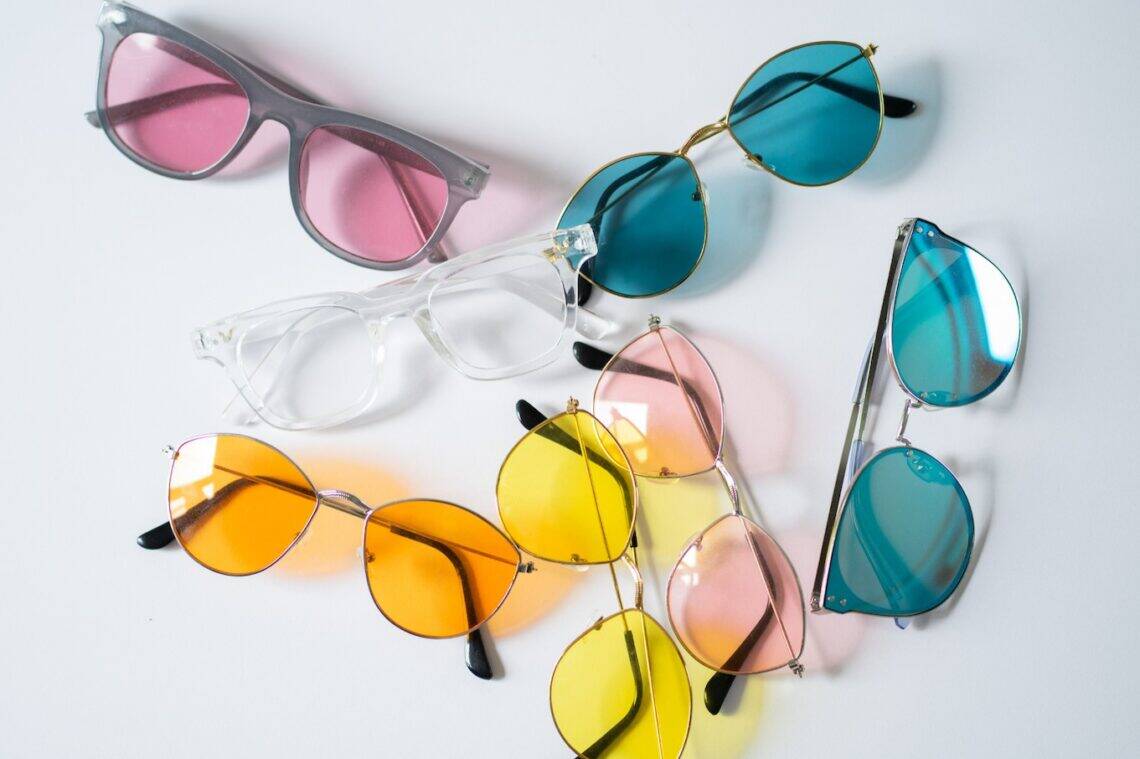
Color makes a big difference in creative projects, and we’ve written about the topic before, including how color-coding can help you get more organized. In this guest post, we explore how Color Therapy Glasses affect your mood and how they can relate to photography and editing – enjoy!
What are Color Therapy Glasses
These days, a lot of wellness shops and holistic lifestyle sites have something eye-catching: rows of tinted lenses in all kinds of colors. They’re called color therapy glasses, though some people casually call them mood glasses, and they’ve become a small but curious tool in the wellness world. The idea is simple enough: you slip them on, and the colored lens filters light into your eyes and nudges your body and mind in subtle ways.
Skeptics will say they’re just tinted sunglasses without UV protection. But if you’ve ever felt calmer in a soft blue room or more energized by a sunny yellow wall, you’ve already brushed against the logic behind them. Color shifts our mood. The glasses just let you bring that effect into your day without repainting your house or changing your wardrobe. Photography works in a similar way: a golden-hour shot feels different from a stark black-and-white portrait. The same scene can carry warmth, drama, or calm depending on the color tones filtered through a lens. Color therapy glasses simply let you experience that shift in real time.
Why People Use Color Therapy Glasses
The practice itself is tied loosely to chromotherapy, which has been around for centuries. Ancient healers believed different shades carried unique vibrations that could influence the body. In modern settings, color therapy glasses are less about cure-alls and more about small resets, like grabbing a cup of tea to settle nerves or lighting a candle to feel grounded.
(Check out color therapy types, techniques, and benefits here.)
Some people use mood glasses during meditation, slipping on a specific shade to align with the chakra they’re working on. Others wear them for short bursts during the day: a green tint while taking a walk, a rose tint before bed, or orange lenses while journaling. It’s not so much about fixing a problem as it is giving yourself a nudge toward balance.
Some people even find that slipping on a certain tint while looking through old photo albums changes how they experience those memories, almost like seeing them with fresh eyes. In fact, many who organize or restore old photographs know that light and color can make an image feel more alive, more connected to the moment it captured. Consider how you might use color in a similar way in your photo editing efforts.
A Quick Word on Chakras and Shades
You don’t need to be a chakra expert to play with colors. The chakras are often described as energy centers along the body, each tied to a color. Whether you see them as literal or symbolic, they give a handy map for experimenting with color therapy glasses.
● Red (Root chakra): Linked with stability, safety, grounding
● Orange (Sacral chakra): Creativity, pleasure, expression
● Yellow (Solar plexus): Confidence, clarity, focus
● Green (Heart chakra): Compassion, healing, balance
● Blue (Throat chakra): Calm, communication, honesty
● Indigo (Third eye): Intuition, reflection, perspective
● Violet (Crown chakra): Spirituality, expansion, openness
If that sounds too mystical, think about it in simpler terms. Red really does wake you up — it’s why stop signs are red. Blue rooms feel quiet. Yellow feels like sunlight. The chakras just give a structure to what most of us already sense.
How Each Shade Feels in Practice
Let’s break down what happens when you actually put these mood glasses on.
Red lenses can be intense. They sharpen the edges of your day, sometimes giving a rush of focus or even restlessness. Good if you need to push through fatigue, maybe not so good right before bed.
Orange lenses feel warmer, playful even. People often describe them as creativity boosters. It’s not hard to see why — everything you look at takes on a glowing, almost sunset tone.
Yellow lenses brighten the world. They tend to lift energy levels, sometimes even making cloudy afternoons feel lighter. A lot of cyclists and skiers wear yellow for that very reason.
Green lenses soften things. Walk through a busy street with green tint over your eyes and the whole scene feels less harsh. It’s steadying, good for anxious days.
Blue lenses slow you down. They carry that cool, ocean-like calm. Great for meditation, though if you’re already sluggish, they might make you want to nap.
Indigo or deep purple lenses feel heavier, in a thoughtful way. They encourage introspection, the kind of vibe that makes journaling or long conversations flow.
Violet lenses lean toward the dreamy. People wear them when they want to feel open, spacious, even spiritual. Some say it’s like slipping into a meditative state without much effort.
Note, however, that there isn’t strong clinical research proving that color therapy glasses heal illnesses or directly balance chakras. Most of the support comes from personal experience and small studies that show color influencing mood and physiology — heart rate, alertness, even appetite.
But the lack of lab data doesn’t mean it’s all in your head. Placebo or not, if slipping on mood glasses helps you shift gears, it’s doing something real for your day. Think of it like aromatherapy: maybe lavender oil doesn’t “cure stress” in a scientific sense, but it can still make a long evening feel softer.
If you’re curious, the best approach is to play. Pick up a set of color therapy glasses with multiple shades. Don’t overthink it. Wear yellow while writing, try green when you’re restless, keep blue for winding down. Notice what sticks.
Color Therapy Glasses Are A Tool, Not a Cure
At the end of the day, mood glasses aren’t magic wands. They won’t solve burnout, heal deep wounds, or replace sleep, food, or psychotherapy. What they can do is give you a gentle shift — a reminder to pause, breathe, reset. For some, that’s enough to feel more in tune with themselves.
Wellness is often built on tiny signals. A warm mug in your hand. A few notes of music. A splash of color across your vision. If color therapy glasses become one of those signals for you, then they’ve already done their job. The same is true for photographs. Sorting through old prints, restoring faded colors, or simply arranging albums can become its form of therapy. Just as mood glasses shift how you see the world in front of you, tending to your photos shifts how you connect with the world behind you.
(If you want to learn more about how to store old printed photos, read this.)
Featured Photo Courtesy of Canva Pro



